Visiting the Isle of Stroma: History, Wildlife & What to Expect
Sitting in the Pentland Firth, just off the north coast of Caithness, the Isle of Stroma is a place with a remarkable story.
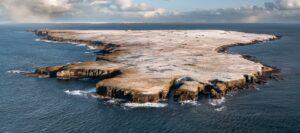
Today, the island has no permanent residents, but Stroma is far from forgotten. Its abandoned homes, old school, church, lighthouse and other remains offer glimpses into the community that once lived here, while sheep still graze the land and wildlife continues to thrive around its coastline.
For decades, Stroma was a place most people could only look across to from the Caithness coast.
Now, visitors have the opportunity to step ashore and discover the island for themselves.
Where is the Isle of Stroma?
Stroma lies in the Pentland Firth, between the north coast of mainland Scotland and Orkney.
The island can be clearly seen from areas around John O’Groats and the north Caithness coast, yet despite being so visible from the mainland, it can feel like a completely different world when you arrive.
The Pentland Firth is famous for its powerful tides and dramatic coastal scenery, while the waters and cliffs surrounding Stroma support a variety of marine life and seabirds.
It makes the journey across to the island part of the experience itself.
Does anyone live on Stroma?
There are no permanent residents living on Stroma today, but that wasn’t always the case.
For generations, Stroma supported a small island community. Families lived and worked here, children attended the island school and islanders made a living through farming, fishing and other work connected to the sea.
The population gradually declined during the 20th century as families moved to the mainland in search of work and easier access to services.
The final resident families left Stroma in the early 1960s.
Today, many reminders of that community remain scattered across the island.
Who owns the Isle of Stroma?
Stroma has been connected to the Simpson family for more than six decades.
James Simpson was born and brought up on the island, at a time when families were still living there.
The Simpson family also farmed on the mainland near John O’Groats, and after Stroma’s remaining residents left, the family continued farming the island.
Following James’s death, his son William Simpson carried on the family business, supported today by his sons Liam and Jamie.
The island remains a working sheep farm, meaning that although Stroma is often described as an abandoned island, there is still plenty of work happening throughout the year.
Sheep need to be moved, gathered and cared for, buildings and infrastructure require maintenance, and the island constantly has to contend with the North Coast weather.
Stroma Wildlife Cruises has allowed the family to share another side of the island with visitors while continuing that long-standing connection.
What can you see on Stroma?
One of the most fascinating things about visiting Stroma is seeing the evidence of its past for yourself.
Buildings and landmarks across the island tell different parts of its story.
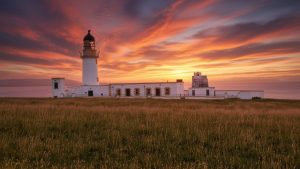
During a Stroma Island Tour, visitors can discover locations including the island cemetery, lighthouse and the Gloop, alongside other remnants of island life.
The cemetery offers a particularly poignant connection with the generations of families who once called Stroma home.
Elsewhere, abandoned buildings provide a glimpse into everyday island life, while Stroma’s rugged coastline tells another story entirely — one shaped by the sea, weather and powerful tides of the Pentland Firth.
Not every historic building on Stroma forms part of the tour route, but travelling across the island gives visitors a real sense of the landscape in which this community once lived.
Is Stroma really an abandoned Scottish island?
You’ll often hear Stroma described as an abandoned Scottish island or even a ghost island.
In terms of permanent residents, that’s true: nobody lives permanently on Stroma today.
But “abandoned” doesn’t quite tell the whole story.
Stroma remains privately owned and is still actively farmed. Sheep live on the island, maintenance work takes place throughout the year and the Simpson family’s connection to Stroma continues.
During the tour season, the island comes to life in another way as visitors arrive to discover its history.
Perhaps it’s more accurate to say that Stroma is uninhabited rather than forgotten.
What wildlife can you see around Stroma?
Stroma’s location makes wildlife another important part of its story.
Depending on the time of year, the cliffs and surrounding waters can be home to an incredible variety of wildlife.
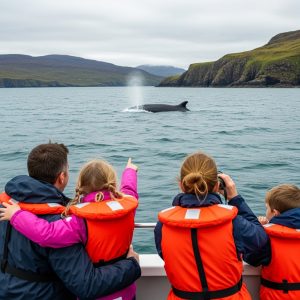
Seabirds found around Stroma include puffins, guillemots and kittiwakes, while seals are also an important presence around the island. Dolphins and other marine wildlife can sometimes be spotted in the surrounding waters too.
The wildlife changes throughout the year.
Spring and summer bring busy seabird colonies to the cliffs, while later in the season many birds begin their migration back out to sea. Autumn also brings another special event around Stroma as seals begin pupping.
Of course, these are wild animals living in their natural environment, so individual wildlife sightings can never be guaranteed.
That’s also part of what makes seeing them so special.
Can you visit the Isle of Stroma?
Yes.
Stroma Wildlife Cruises operates Stroma Island Tours from John O’Groats, giving visitors the opportunity to land on the island and explore some of its history, landscape and landmarks.
After travelling across the Pentland Firth aboard Stroma Voyager, guests arrive on Stroma before exploring the island with the team.
Transport between stops is provided using our purpose-built island trailer, allowing visitors to see different parts of Stroma and hear the stories connected with them.
Our tours are about more than simply looking at old buildings.
They are an opportunity to hear about the people who lived here, discover how the island was farmed, understand the Simpson family’s connection with Stroma and experience a place that relatively few people have had the opportunity to explore.
What is accessibility like on Stroma?
Stroma is a historic, uninhabited island, so it’s important to understand that the experience is different from visiting a conventional visitor attraction.
Passengers board Stroma Voyager using the harbour steps at John O’Groats and use the harbour steps when disembarking on Stroma.
Once on the island, guests travel between stops in our purpose-built trailer, which has bespoke steel access steps and handrails to make getting on and off easier.
However, parts of Stroma have uneven ground, grassy paths and rough terrain, so a reasonable level of mobility is recommended.
If you have limited mobility or specific accessibility requirements, we recommend contacting us before booking. We’re happy to explain the tour and access arrangements so you can decide whether the experience will be suitable for you.
When is the best time to visit Stroma?
Stroma Wildlife Cruises operates seasonally, with our 2027 season beginning in May.
What you’ll experience will change as the season progresses.
Those visiting earlier in the season can experience Stroma as seabird activity builds around the coastline, while the landscape, wildlife and farming activity continue to change throughout the summer.
If seeing a particular species is important to you, it’s always worth researching its usual seasonal patterns before choosing when to visit. Wildlife is unpredictable, and sightings cannot be guaranteed.
Whatever point in the season you choose, the island’s history and landscape remain at the heart of the experience.
How do you get to Stroma?
Stroma Wildlife Cruises operates from John O’Groats in Caithness, making a trip to Stroma a memorable addition to a visit to the far north of Scotland or a journey along the North Coast 500.
Visitors joining a Stroma Island Tour travel across aboard Stroma Voyager before landing on the island.
Tour dates and availability vary throughout the season and are subject to suitable conditions, so we recommend checking current availability before planning your visit.
Discover Stroma for yourself
For many people who live in or visit Caithness, Stroma is a familiar sight on the horizon.
But looking across at the island and actually stepping ashore are two very different experiences.
Stroma is a place of contrasts: an island without permanent residents that remains a working farm; abandoned buildings surrounded by thriving wildlife; and generations of history sitting just a short journey from the mainland.
Through Stroma Wildlife Cruises, we’re proud to be able to share some of that story.
Our Stroma Island Tours return in May 2027.
Keep an eye on our website and social media pages for 2027 booking announcements, or explore our Stroma Island Tour page to learn more about visiting the island.