Rising from the rugged edge of one of Scotland’s most atmospheric islands, the Stroma Island Lighthouse stands as a quiet witness to centuries of maritime history. Perched above the powerful tidal races of the Pentland Firth, this remote Scottish lighthouse has guided sailors through one of the most dangerous stretches of water in Europe.
Today, it remains a compelling symbol of human ingenuity, endurance and the vital role Stroma Island has played in maritime safety.
For visitors exploring the northern coast of Scotland or joining a Stroma Island Tour, the lighthouse is more than a navigational aid. It is a doorway into the layered history of Stroma Island itself, where isolation, innovation and the sea have always been closely entwined.
The Strategic Importance of Stroma Island
To understand the significance of the Stroma Island Lighthouse, it helps to appreciate its setting. Stroma lies in the Pentland Firth, the narrow channel separating mainland Scotland from Orkney. This stretch of water is notorious for fierce tides, whirlpools and unpredictable weather, conditions that have tested sailors for centuries.
Long before modern navigation systems, ships passing through these waters relied heavily on visible landmarks and coastal lights. Wrecks were once a common sight around Stroma, and the need for a reliable lighthouse became increasingly urgent as maritime traffic grew during the 19th century.
The history of Stroma Island is inseparable from this role as a guardian of the sea, positioned where land meets one of Scotland’s most challenging marine environments.
The Construction of the Stroma Island Lighthouse
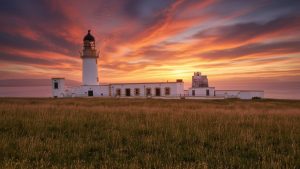
The Stroma Island Lighthouse was first lit in 1890, built by the Northern Lighthouse Board, the organisation responsible for many of Scotland’s most iconic lighthouses. Designed to withstand extreme weather and relentless salt spray, the structure was deliberately robust, functional rather than ornate.
Constructed from local stone, the lighthouse stands near the island’s western cliffs, offering clear visibility across the Pentland Firth. Its powerful beam became a crucial reference point for vessels navigating between the Atlantic and the North Sea. Among Scottish lighthouses, Stroma’s is notable not for its size, but for its placement in one of the most strategically vital maritime corridors in the country.
Life as a Lighthouse Keeper on Stroma
For much of its working life, the lighthouse was manned by keepers and their families, adding another human chapter to the history of Stroma Island. Living conditions were demanding. Supplies arrived by boat when weather allowed, and keepers often faced long periods of isolation, particularly during winter storms when the island could be completely cut off.
Daily routines revolved around maintaining the light, cleaning lenses, monitoring weather conditions and recording ship movements. The role required precision and discipline; a failure of the light could mean disaster for vessels battling the Pentland Firth’s currents. Despite the hardships, lighthouse keeping fostered a strong sense of purpose.
The keepers knew their work saved lives, even if those lives were never seen face to face.
Automation and the End of an Era
Like many Scottish lighthouses, the Stroma Island Lighthouse was automated in the late 20th century. Advances in technology made it possible for the light to operate without a permanent human presence, bringing an end to the traditional lighthouse keeper role on the island.
Automation marked a turning point in the story of Stroma. As the need for staff diminished, the island’s population declined, eventually leading to its complete abandonment. While automation improved efficiency and safety, it also closed a deeply human chapter in the lighthouse’s history, replacing lived experience with silent reliability.
The Lighthouse’s Role in Maritime Safety Today
Although no longer manned, the Stroma Island Lighthouse continues to play an important role in modern maritime safety. Its light remains an essential visual aid, complementing GPS and electronic navigation systems. In an area where technology can fail due to weather or signal interference, physical lighthouses still provide a crucial layer of security.
For ships transiting the Pentland Firth, the lighthouse is a reassuring constant, linking today’s sailors with centuries of seafaring tradition. It stands as proof that even in an age of satellites, there is still a place for stone, light and careful positioning.
Experiencing the Lighthouse on a Stroma Island Tour
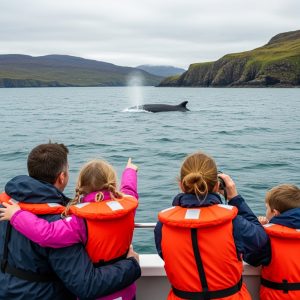
For those interested in Scotland historical tours, few experiences compare to seeing the Stroma Island Lighthouse from the sea. A Stroma Island Tour offers a unique perspective, revealing the island as sailors would have encountered it: rising starkly from the water, shaped by wind, waves and time.
From the deck of a boat, visitors can appreciate the lighthouse’s relationship with its environment and understand why it was built exactly where it stands. Combined with sightings of seabirds, seals and occasionally dolphins, the lighthouse becomes part of a broader story about the natural and human history of this remarkable place.
A Lasting Symbol of Stroma’s Legacy
The Stroma Island Lighthouse remains one of the island’s most enduring landmarks, embodying the resilience and ingenuity that define Scotland’s coastal heritage. It tells a story not just of engineering, but of people who lived and worked at the edge of the known world to protect those passing through it.
For visitors, historians and maritime enthusiasts alike, the lighthouse is a reminder that the history of Stroma Island is still very much alive, etched into stone, light and sea. As boats continue to pass through the Pentland Firth, the lighthouse keeps watch, just as it has for more than a century, a true beacon of history in the far north of Scotland.